 Since 1970
Since 1970
Since 1970
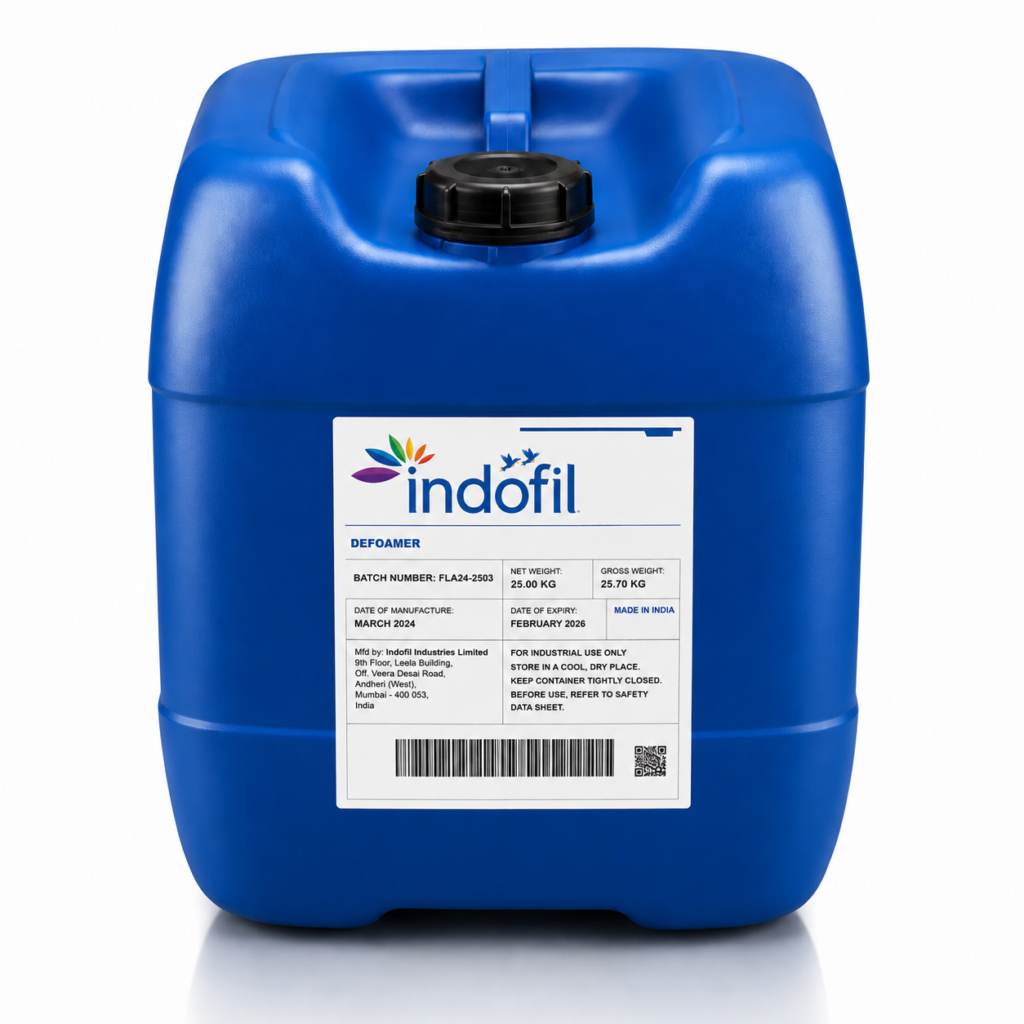
High-performance Defoamers and Anti-Foaming Agents engineered to rapidly eliminate micro and macro foam bubbles during manufacturing, filling, and high-shear application processes. Prevents surface defects such as pinholes and craters while maintaining coating integrity.
Available Chemistry Types: Mineral Oil-Based, Silicone/Polysiloxane-Based, and Molecular/Polymer-Free (Acetylenic Diols)
Primary Function: Rapid macro-foam knockdown and long-term micro-foam air deaeration
Key Properties: Elimination of pinholes, craters, and fish-eyes; highly compatible with minimal gloss reduction
Standard Packaging: 25kg plastic pails / 200kg steel drums / 1,000kg IBC totes
Defoamers and Deaerators are critical process additives formulated to break down air bubbles trapped within liquid systems. Air typically becomes incorporated during high-speed grinding, paint mixing, filling lines, or during roller and spray applications. Defoamers operate by migrating into the unstable foam wall, disrupting the surface tension profile, and causing the bubbles to collapse instantly. This avoids structural weak points, pinholes, and aesthetic flaws in the cured protective film.
Mineral Oil-Based Defoamers: Highly economical and effective macro-foam knockdowns. They are widely used in high-PVC architectural emulsion paints, flat latex wall coatings, and wastewater processing where cost-efficiency and rapid action are primary requirements.
Silicone & Polysiloxane-Based Defoamers: Highly active organo-modified siloxanes. They provide strong, long-lasting defoaming performance across challenging synthetic resin matrices like pure acrylics, epoxies, and polyurethanes. They are carefully balanced to maximize foam knockdown while avoiding cratering defects.
Molecular Deaerators (Silicone-Free): Utilizing acetylenic diol technology, these additives penetrate down into the micro-foam matrix to release fine, pin-headed air bubbles before the film cures. They are the premium choice for clear wood varnishes, automotive topcoats, and high-gloss finishes.
Architectural Latex & Emulsion Paints: Added during both the grinding and let-down phases to manage foam during factory production and ensure smooth, crater-free roller application for painters.
Industrial & Protective Topcoats: Essential for high-pressure airless spray applications to prevent micro-foam entrapment, which compromises corrosion resistance.
Printing Inks & Overprint Varnishes: Applied in high-speed flexographic and gravure packaging inks to preserve continuous ink-film transfers and crisp edge printing.
Adhesives, Sealants & Polymers: Ensures void-free casting and uniform thickness profiles for water-borne adhesives, clear epoxy floors, and polymer synthesis loops.
| Parameter / Property | Mineral Oil Compound | Polysiloxane Emulsion | Molecular Deaerator |
| Physical Appearance | Hazy, opaque liquid | Milky white emulsion | Clear to light amber fluid |
| Active Content (%) | 100% Active | 20.0% – 60.0% | 50.0% – 100% |
| Specific Gravity (25°C) | 0.85 – 0.92 | 0.98 – 1.02 | 0.93 – 0.97 |
| System Compatibility | High-PVC / Flat Matt | Gloss Coatings / Polymers | Clear Coats / High-Gloss Inks |
| Defoaming Speed | Fast (Macro-foam) | Exceptional (Long-lasting) | Precision (Micro-foam deaeration) |
Store inside original, tightly closed containers in a cool, dry, and well-ventilated warehouse space. Protect liquid emulsions from freezing conditions (maintain temperatures between 5°C and 40°C) to prevent phase separation. Agitate or stir thoroughly before production integration if the product has been stored statically for an extended duration. Material Safety Data Sheets (MSDS) and batch-specific Certificates of Analysis (COA) are provided with every industrial order.