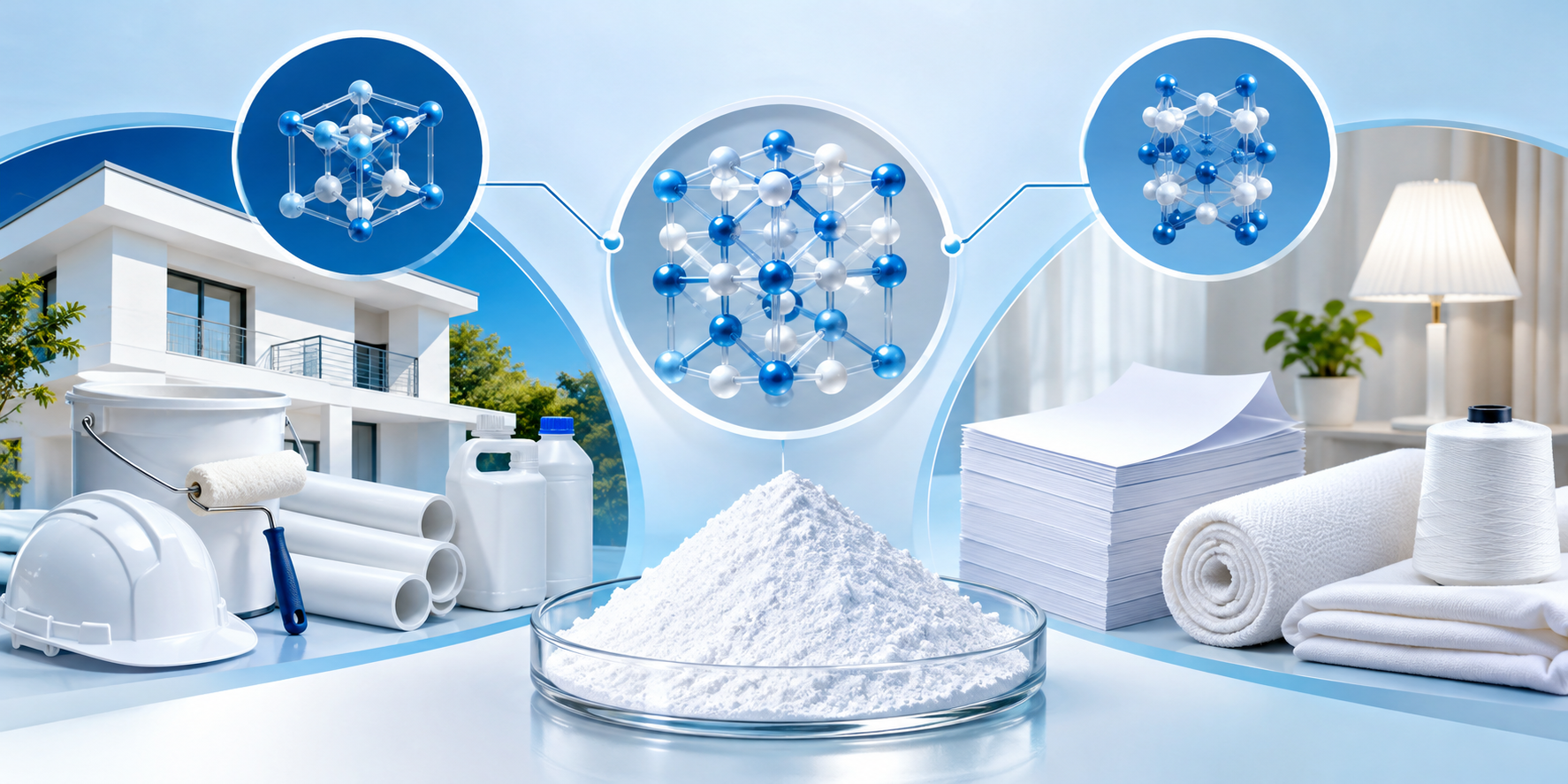
Titanium Dioxide (TiO₂) plays an important role in several manufacturing industries. It gives products excellent whiteness, brightness, opacity, and coverage. Manufacturers use it in paints, coatings, plastics, paper, printing inks, and many other industrial applications.
However, choosing the right Titanium Dioxide grade can be confusing. The two main options are Rutile and Anatase. Although both contain the same chemical compound, they offer different properties and performance benefits.
So, which grade should you choose for your product? Let’s understand their differences, applications, and benefits to make the right decision.
If you are looking for a reliable Chemours Ti-Pure Titanium Dioxide Dealer in Delhi, understanding these grades will help you select the right material for your manufacturing needs.
What Is Titanium Dioxide?
Titanium Dioxide, also known as TiO₂, is a white inorganic pigment widely used in industrial manufacturing. Its excellent light-scattering properties help products achieve better whiteness, brightness, and hiding power.
Manufacturers mainly use two crystalline forms of Titanium Dioxide:
- Rutile Titanium Dioxide: Known for high opacity, durability, and weather resistance.
- Anatase Titanium Dioxide: Popular for its whiteness and suitability for selected indoor and industrial applications.
Both grades serve different purposes. Therefore, manufacturers should consider their final product requirements before selecting one.
1. What Is Rutile Titanium Dioxide?
Rutile Titanium Dioxide is widely preferred for applications that require high opacity and long-lasting performance. It has a higher refractive index than Anatase, which allows it to scatter light more effectively.
As a result, manufacturers achieve excellent hiding power and better coverage with Rutile grades.
Key Benefits of Rutile TiO₂
- Excellent opacity and hiding power.
- High whiteness and brightness.
- Better resistance to UV-related degradation.
- Good outdoor weather resistance.
- Excellent performance in paints and coatings.
- Suitable for various plastic and polymer applications.
Where Is It Used?
Rutile Titanium Dioxide is commonly used in exterior paints, industrial coatings, automotive finishes, plastic masterbatch, PVC products, and protective coatings.
Moreover, manufacturers prefer Rutile when their products need to maintain colour, appearance, and durability under demanding conditions.
2. What Is Anatase Titanium Dioxide?
Anatase Titanium Dioxide is another important commercial grade. It offers good whiteness and brightness, making it suitable for several specialised manufacturing applications.
Compared with Rutile, Anatase has a lower refractive index. It also shows greater photocatalytic activity, which can make it less suitable for applications that demand long-term outdoor weather resistance.
Key Benefits of Anatase TiO₂
- Good whiteness and brightness.
- Suitable for selected indoor applications.
- Generally lower abrasiveness.
- Useful in specific paper manufacturing applications.
- Suitable for certain textile and fibre applications.
Where Is It Used?
Manufacturers commonly use Anatase in paper, textiles, fibres, rubber, and selected industrial formulations.
However, the final selection depends on the required brightness, processing conditions, and product specifications.
3. Rutile vs Anatase Titanium Dioxide: Key Differences
Understanding the differences between these grades makes purchasing decisions easier.
| Comparison | Rutile TiO₂ | Anatase TiO₂ |
|---|---|---|
| Crystal Structure | Rutile | Anatase |
| Refractive Index | Higher | Lower |
| Hiding Power | Higher | Comparatively lower |
| Whiteness | Excellent | Excellent |
| UV Resistance | Generally better | Comparatively lower |
| Weather Resistance | Better | Limited |
| Abrasiveness | Generally higher | Generally lower |
| Main Applications | Paints, coatings, plastics | Paper, textiles, selected indoor products |
Overall, Rutile works better for demanding outdoor applications. On the other hand, Anatase offers useful properties for specific indoor and industrial requirements.
4. Which Titanium Dioxide Grade Is Right for Your Industry?
The right grade depends on your manufacturing process and final product. Here are some common applications to consider.
Paints and Coatings: Rutile is generally the preferred choice for exterior paints, industrial coatings, and protective finishes. Its opacity and weather resistance help maintain coating performance.
Plastic and Masterbatch: Rutile works well in PVC, plastic masterbatch, and polymer applications. It provides excellent brightness, hiding power, and colour stability.
Paper Manufacturing: Anatase can be a suitable option for paper products that require good whiteness and brightness.
Textiles and Rubber: Anatase also serves selected textile, fibre, and rubber applications. However, manufacturers should check formulation compatibility before purchasing.
Therefore, always review the Technical Data Sheet (TDS) before selecting a particular grade.
5. Why Choose Chemours Ti-Pure Titanium Dioxide?
Chemours Ti-Pure is a recognised Titanium Dioxide pigment range that offers specialised Rutile grades for different industrial requirements.
For example, manufacturers can consider the following grades:
- Ti-Pure R-902+: A versatile option for architectural and industrial coatings.
- Ti-Pure R-706: Suitable for demanding coating applications that require gloss retention and durability.
- Ti-Pure R-104: Designed for plastic and thermoplastic masterbatch applications.
- Ti-Pure R-105: Suitable for durable plastic applications, including outdoor plastics.
Each grade offers different performance characteristics. Therefore, manufacturers should match the product with their resin system, processing conditions, and end-use requirements.
6. Where to Buy Chemours Ti-Pure Titanium Dioxide in Delhi NCR?
Finding a dependable supplier is just as important as selecting the right grade. Manufacturers need consistent product quality, technical documentation, and reliable supply support.
Bharat Solvent & Chemical Corpn. supplies Chemours Ti-Pure Titanium Dioxide for industrial applications across Delhi NCR and North India.
As a trusted Chemours Ti-Pure TiO2 Distributor in Delhi NCR, Bharat Solvent supports manufacturers with:
- Genuine Chemours Ti-Pure product sourcing.
- Bulk industrial supply solutions.
- Technical Data Sheet (TDS) support.
- Certificate of Analysis (COA) assistance.
- Grade selection guidance.
- Delivery coordination across Delhi NCR.
Whether you manufacture paints, coatings, plastics, or masterbatch, the team can help you identify suitable grades according to your requirements.
Frequently Asked Questions (FAQs)
1. Which is better, Rutile or Anatase Titanium Dioxide?
Rutile is generally better for applications that require high opacity, durability, and outdoor weather resistance. Anatase suits selected indoor and specialised industrial applications.
2. Is Rutile Titanium Dioxide suitable for plastic manufacturing?
Yes. Manufacturers widely use Rutile in PVC, plastic masterbatch, and polymer products because of its excellent opacity and brightness.
3. Which Chemours Ti-Pure grades are popular?
Some commonly used grades include R-902+, R-706, R-104, and R-105. Each grade serves different industrial requirements.
4. How can I select the right Titanium Dioxide grade?
Consider your application, opacity requirements, UV exposure, dispersion needs, processing conditions, and product specifications before making a decision.
Final Thoughts
Both Rutile and Anatase Titanium Dioxide offer valuable benefits for industrial manufacturing. However, the right choice depends on your product requirements and expected performance.
Rutile generally suits paints, coatings, and plastics that require durability and high opacity. Meanwhile, Anatase works well in selected paper, textile, and indoor applications.
For reliable Chemours Ti-Pure Titanium Dioxide supply in Delhi NCR, connect with Bharat Solvent & Chemical Corpn. to discuss your grade requirements, bulk orders, and technical specifications.