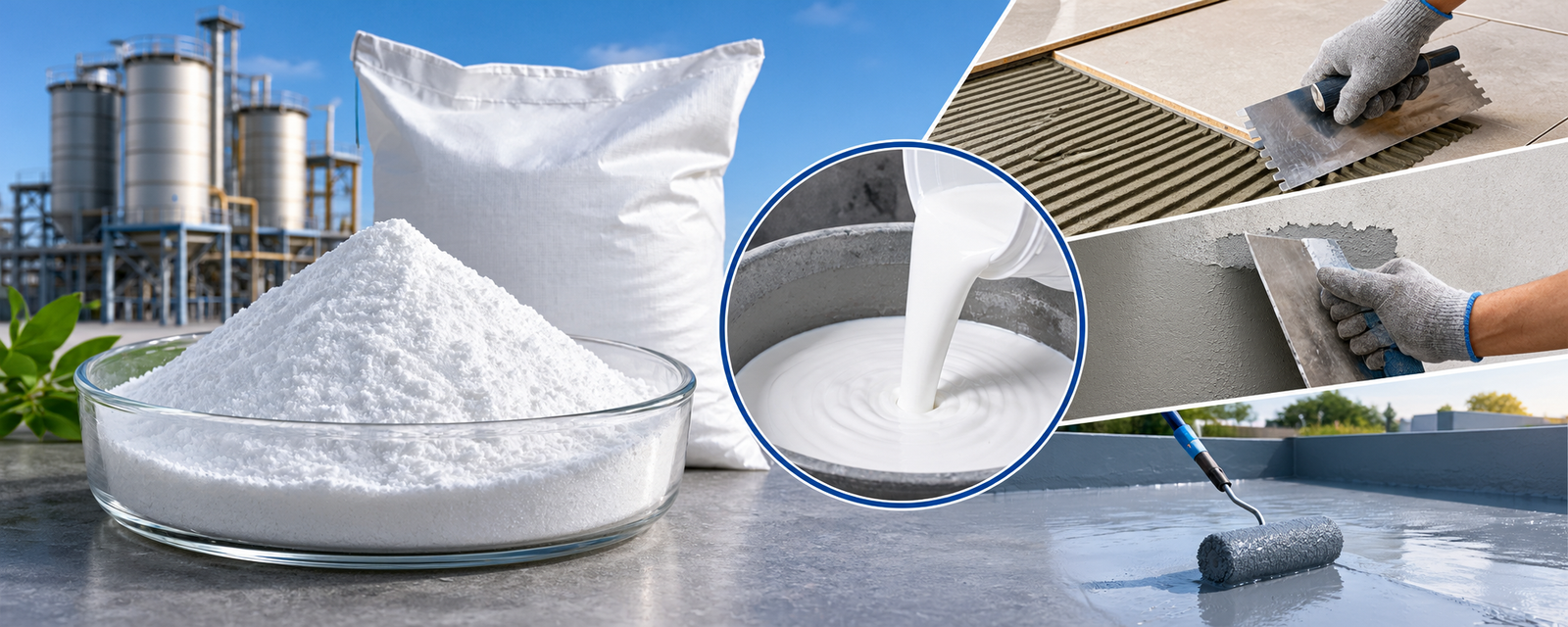
Choosing the right raw materials is essential for producing high-quality tile adhesives, dry-mix mortars, and waterproofing products. Among these materials, Redispersible Polymer Powder (RDP) plays an important role in improving adhesion, flexibility, and the overall performance of cement-based formulations.
For manufacturers and construction professionals, finding a reliable RD Powder Supplier in Delhi NCR is crucial for maintaining consistent product quality and achieving dependable results across different applications.
However, selecting a supplier involves more than comparing prices. Product quality, technical support, batch consistency, storage practices, and delivery reliability are equally important. This guide explains what to look for when choosing an RDP supplier and how to make an informed purchasing decision.
What Is Redispersible Polymer Powder (RDP)?
Redispersible Polymer Powder, commonly known as RDP, is a polymer-based additive used in dry-mix construction materials. When mixed with water, it forms a polymer dispersion that helps improve the performance of cement-based products.
RDP is commonly used in tile adhesives, wall putty formulations, repair mortars, skim coats, and selected waterproofing systems.
Depending on the polymer chemistry, grade, and formulation, RDP can contribute to:
- Improved adhesion: Supports bonding between cement-based materials and suitable substrates.
- Enhanced flexibility: Helps accommodate minor movement and reduces brittleness in appropriate formulations.
- Better crack resistance: Can improve resistance to cracking caused by shrinkage and mechanical stress when properly formulated.
- Improved workability: May contribute to smoother application and easier handling.
- Greater durability: Supports the long-term performance of construction materials when used at the recommended dosage.
The final performance depends on the RDP grade, dosage, cement type, other additives, substrate conditions, and curing practices.
Why Choosing the Right RDP Supplier Matters
A dependable supplier can help manufacturers maintain production consistency while reducing avoidable material-related problems.
Working with an experienced Redispersible Polymer Powder (RDP) Dealer Delhi can offer several practical advantages.
1. Consistent Batch Quality
Consistency between batches is important for manufacturers producing tile adhesives and dry-mix mortar on a regular basis. Changes in polymer powder properties can affect adhesion, flexibility, workability, and formulation performance.
Ask the supplier for relevant technical documentation and batch-specific quality records. Where necessary, evaluate samples before placing bulk orders.
2. Suitable Grades for Different Applications
Not every RDP grade is suitable for every construction application. Tile adhesives, repair mortars, skim coats, and waterproofing products may require different performance characteristics.
A knowledgeable supplier should help you identify a grade based on your formulation requirements rather than recommending a product solely on price.
3. Competitive and Transparent Pricing
Raw material costs directly influence manufacturing expenses. However, choosing the cheapest product without evaluating its quality can lead to inconsistent results and additional production costs.
Compare prices alongside product specifications, packaging, minimum order quantities, transportation charges, and technical support.
4. Reliable Delivery Schedules
Delayed raw material deliveries can interrupt production and affect customer commitments. Manufacturers should check stock availability, dispatch timelines, order fulfilment capacity, and delivery coverage across Delhi NCR.
For recurring requirements, discuss procurement schedules and expected monthly consumption with the supplier.
5. Technical Support and Documentation
Technical support is particularly valuable when developing new formulations or resolving performance issues.
Before purchasing, ask whether the supplier can provide a Technical Data Sheet (TDS), Safety Data Sheet (SDS), recommended application information, and suitable handling and storage instructions.
Key Factors to Consider Before Buying RDP
Before finalising an RDP supplier, evaluate the following factors carefully.
Product Specifications
Review the technical specifications relevant to your application. Depending on the product grade, these may include polymer composition, bulk density, ash content, residual moisture, particle characteristics, and recommended use.
Always compare products using the manufacturer’s documented specifications and applicable test methods.
Application Requirements
Identify the intended use before selecting a grade.
- Tile adhesives: Evaluate bonding performance, flexibility, and compatibility with the overall formulation.
- Dry-mix mortars: Consider workability, adhesion, and the performance requirements of the finished product.
- Repair mortars: Assess bond performance, mechanical requirements, and compatibility with the repair system.
- Waterproofing formulations: Select grades specifically evaluated for the intended system, including flexibility and water-related performance where relevant.
RDP is not a universal solution for every waterproofing application. The complete formulation must meet the required performance standards.
Sample Testing and Quality Verification
Whenever possible, test a sample in your actual formulation before committing to a large purchase.
Evaluate the finished product under appropriate laboratory or field conditions. For tile adhesives, for example, relevant tests may include tensile adhesion strength, open time, and other application-specific performance requirements.
Do not rely exclusively on appearance, powder colour, or supplier claims to judge product quality.
Packaging and Storage
RDP should be stored according to the manufacturer’s recommendations. Moisture exposure, damaged packaging, and unsuitable storage conditions can affect handling and product quality.
Check that bags are properly sealed, packaging is intact, and storage and transportation practices are appropriate for the product.
How to Evaluate an RDP Supplier in Delhi NCR
Finding the right supplier becomes easier when you follow a structured evaluation process.
Step 1: Define your requirements. Identify the application, approximate monthly consumption, preferred packaging, and performance specifications.
Step 2: Shortlist suitable suppliers. Look for suppliers that can clearly explain their product range, sourcing, documentation, and supply capabilities.
Step 3: Request technical documents. Obtain the relevant TDS, SDS, product specifications, and batch quality documentation where available.
Step 4: Compare samples and pricing. Evaluate technical suitability first, then compare the total delivered cost and commercial terms.
Step 5: Confirm supply reliability. Discuss lead times, order quantities, dispatch schedules, and the process for addressing quality concerns.
Step 6: Start with a suitable order size. Where practical, begin with a trial purchase and verify performance before moving to regular bulk procurement.
This approach helps buyers make decisions based on measurable requirements instead of relying only on price or promotional claims.
Common Mistakes to Avoid When Purchasing RDP
Even experienced buyers can encounter avoidable problems when procurement decisions are based on incomplete information.
Here are some common mistakes to avoid:
- Selecting an RDP grade without checking its suitability for the intended application.
- Choosing a product solely because it has the lowest price.
- Ignoring batch-to-batch consistency and technical documentation.
- Purchasing large quantities without conducting suitable formulation trials.
- Overlooking packaging condition and storage recommendations.
- Failing to confirm delivery timelines before committing to a production schedule.
- Assuming that one RDP grade will deliver the same results in every formulation.
A systematic purchasing process helps reduce these risks and supports more consistent manufacturing outcomes.
Why Consider Bharat Solvent for Your RDP Requirements?
For businesses sourcing construction chemicals and formulation raw materials, supplier evaluation should focus on product suitability, transparent communication, and dependable supply arrangements.
Bharat Solvent can be considered as a potential sourcing partner for buyers looking for redispersible polymer powder and related raw materials, subject to verification of its current product range and supply capabilities.
Before finalising your purchase, discuss your application requirements, required grade, expected quantity, technical documentation, pricing, and delivery location with the Bharat Solvent team.
Manufacturers should also confirm product availability and request the relevant specifications before placing an order. These checks help establish whether a supplier can meet the technical and commercial requirements of a particular project.
Frequently Asked Questions (FAQs)
1. What is Redispersible Polymer Powder used for?
Redispersible Polymer Powder is used in various dry-mix construction materials, including tile adhesives, cement-based mortars, skim coats, and selected repair and waterproofing formulations. Its main purpose is to improve properties such as adhesion and flexibility, depending on the grade and formulation.
2. How do I choose a reliable RD Powder Supplier in Delhi NCR?
Evaluate the supplier’s product specifications, quality documentation, batch consistency, pricing transparency, technical support, packaging practices, and delivery reliability. Testing a sample in your intended formulation is also recommended.
3. What should I check before purchasing RDP in bulk?
Review the Technical Data Sheet, confirm the grade’s suitability, request available batch quality records, compare delivered pricing, and conduct formulation trials where practical. Also verify packaging integrity, storage requirements, and delivery timelines.
4. Is every RDP grade suitable for tile adhesive manufacturing?
No. Different grades can have different performance characteristics. The correct choice depends on the tile adhesive formulation, substrate, application conditions, and required performance classification. Always evaluate the grade against the relevant product specifications and tests.
5. Why is batch consistency important when buying RDP?
Consistent raw material properties help manufacturers maintain more predictable formulation behaviour and finished-product performance. Significant variations may affect workability, adhesion, and other application-specific properties.
6. How can I compare two RDP suppliers fairly?
Compare technical specifications, sample test results, documentation, delivered cost, minimum order quantities, supply reliability, and support. A fair comparison considers the total value of the product rather than the quoted price alone.
7. How should RDP be stored?
Follow the product manufacturer’s storage instructions. In general, protect the powder from moisture, keep packaging sealed, and store it in suitable conditions to maintain product quality and handling characteristics.
Conclusion
Choosing the right Redispersible Polymer Powder supplier is an important step in maintaining product quality, improving manufacturing consistency, and managing raw material costs. Buyers should consider technical specifications, application suitability, batch consistency, documentation, pricing, and delivery reliability before making a decision.
If you are searching for an RD Powder Supplier in Delhi NCR or evaluating a Redispersible Polymer Powder (RDP) Dealer Delhi, use these criteria to compare available options and verify each supplier’s capabilities.
Bharat Solvent is a potential point of contact for businesses exploring RDP and related raw material requirements. Contact the team to discuss your application, check current product availability, request technical specifications, and determine whether the available products meet your procurement needs.
A well-informed supplier choice can help build a more reliable raw material sourcing process and support the consistent performance of your construction chemical products.