When buying chemicals for industrial production, even a small difference in quality can affect the final product. This is especially true for phthalic anhydride, a key raw material used in plasticizers, alkyd resins, paints, coatings, and unsaturated polyester resins.
But how do you know whether a batch is suitable for your process? Before placing a bulk order with a Phthalic Anhydride Supplier in Delhi NCR, it helps to understand the basic quality checks. Here’s what to look for, without getting lost in complicated chemistry.
What Is Phthalic Anhydride?
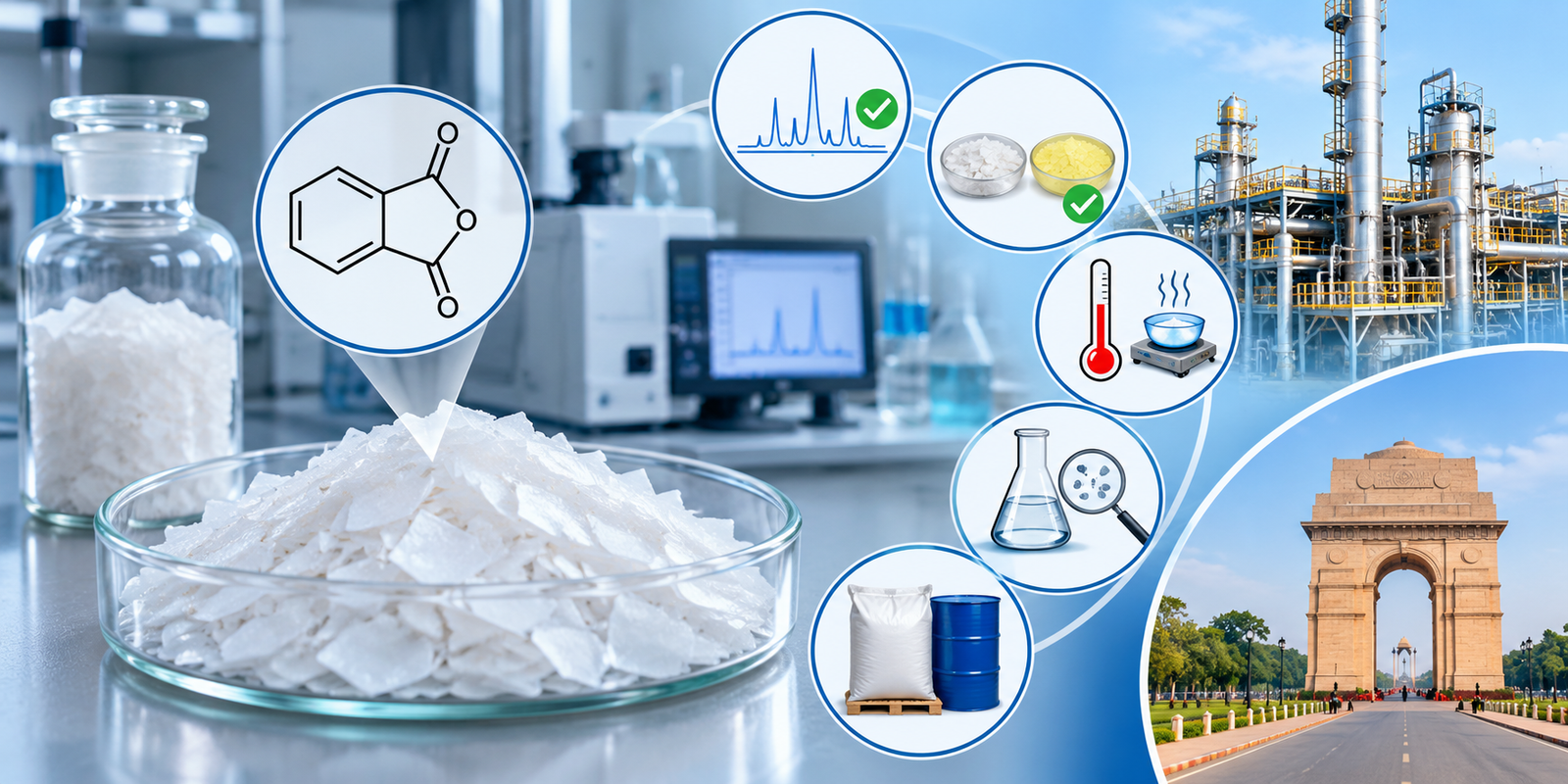
Phthalic anhydride is an organic compound with the chemical formula C8H4O3 and CAS number 85-44-9. It is commonly supplied as white flakes or in molten form for industrial use.
Its quality matters because impurities can interfere with manufacturing, affect product colour, or lead to inconsistent results. That’s why buyers should compare the supplier’s specification with their own production requirements rather than relying on appearance or price alone.
1. Check the Purity Percentage
Purity is one of the first numbers to check on a technical data sheet. High-purity industrial material is often specified at 99.8% or higher, although the acceptable level depends on the intended application.
A laboratory can measure purity using gas chromatography (GC), which separates and measures chemical components in the sample. This is more reliable than judging a product by sight.
Ask for a batch-specific Certificate of Analysis (COA), not just a general product brochure. The certificate should clearly show the tested purity and batch identification.
2. Examine the Colour and Appearance
Good-quality phthalic anhydride flakes are generally white. Yellowish or noticeably discoloured material may deserve further investigation, but appearance alone cannot confirm purity.
For molten material, laboratories may use the Hazen or APHA colour scale. A lower colour value generally indicates a clearer product. The appropriate limit depends on your process and the agreed specification.
If you manufacture light-coloured resins or coatings, colour consistency can be particularly important.
3. Review the Melting or Solidification Point
Phthalic anhydride typically melts around 131°C. Industrial specifications often include a solidification point, which provides another useful quality indicator.
A result outside the agreed range can suggest contamination or another quality issue. However, this test should support—not replace—direct purity analysis.
Always compare the reported figure with the method and limit mentioned in the supplier’s technical data sheet.
4. Look for Unwanted Impurities
A high purity percentage is encouraging, but it does not tell the whole story. Some impurities can matter even when present in small amounts.
For example, buyers may need to review levels of phthalic acid, maleic anhydride, benzoic acid, or other process-related impurities. The acceptable limits depend on how the material will be used.
In India, the updated IS 5158:2025 specification for technical phthalic anhydride includes GC-based testing for purity and specified impurities. This makes the test report an important part of supplier evaluation.
5. Check Moisture Exposure and Packaging
Phthalic anhydride reacts with water to form phthalic acid. Poor storage or damaged packaging can therefore affect material quality before it reaches your factory.
Inspect the packaging for moisture, tears, or signs of improper sealing. For bulk orders, confirm how the supplier stores and transports the product.
Keep the material in suitable, tightly closed packaging in a dry area, following its Safety Data Sheet (SDS). Sampling and handling should be performed by trained personnel using appropriate protective equipment.
6. Confirm the Right Grade for Your Application
Not every buyer needs the same specification. Technical or industrial-grade phthalic anhydride is commonly used in resin, plasticizer, and coating production. Laboratory or reagent grades may be supplied with different testing and documentation requirements.
Rather than selecting a grade based only on its name, check the actual specifications:
- Minimum purity percentage
- Colour and solidification point
- Limits for relevant impurities
- Packaging format and batch traceability
- Availability of COA, TDS, and SDS documents
This simple comparison can prevent costly production delays.
Choosing a Reliable Supplier in Delhi NCR
A dependable Phthalic Anhydride Supplier in Delhi NCR should make quality information easy to verify. Ask whether the supplier can provide batch-specific test results, consistent specifications, suitable packaging, and dependable delivery schedules.
It is also sensible to request a sample for independent testing before committing to a large purchase, especially when switching suppliers.
Final Thoughts
Checking phthalic anhydride quality does not have to be complicated. Start with the purity report, review colour and solidification results, examine impurity levels, and verify storage conditions.
Most importantly, choose a grade that matches your manufacturing process. With clear documentation and a reliable supplier, you can buy with greater confidence and maintain more consistent production quality.